Hear us, my lord (Gen. 23:6)
As a token of their respect, the sons of Chet addressed Abraham as "my lord." Abraham, however, refused to reciprocate, even in his business dealings. Abraham, the first Jew, reserved the term solely for G-d, despite social convention.
(Rabbi Yosef Horowitz, the Alter of Navhardok)
--------------------------------------------------------------------------------
And the servant ran to meet her (Gen. 24:17)
According to the commentator Rashi, it was only when Eliezer saw the well water miraculously rising toward Rebecca that he decided she would make the perfect wife for Isaac. Yet only the water Rebecca drew for her own use rose up by itself; the water she drew for Eliezer and his camels had to be brought up by hand. We learn from this that although G-d may perform miracles to assist a righteous person, when it comes to doing mitzvot (commandments), it is preferable to perform them oneself in a natural manner and not to rely on miracles.
(Rabbi Levi Yitzchak of Berditchev)
--------------------------------------------------------------------------------
And Abraham gave all that he had to Isaac, but to the sons of the concubines... he gave gifts (Gen. 25:5-6)
Isaac is symbolic of holiness and the spiritual realm; the "sons of the concubines" stand for the physical and corporeal world. The Torah teaches that we must give "all" of ourselves - the lion's share of our time, energy and talents - to spiritual matters. Worldly matters, however, can be placated with "gifts."
(The Lubavitcher Rebbe)
--------------------------------------------------------------------------------
Then Abraham expired, and died in a good old age (Gen. 25:8)
On the day that Abraham passed away, the greatest of the nations cried, "Woe to the world that has lost its leader; woe to the ship that has lost its captain."
(Talmud, Baba Batra)


The Soul

G-d's Candle is Man's Soul
About Me

- Rabbi Rapp
- Melbourne, Victoria, Australia
- My aim to help students develop into proud and effective Jews empowering them to lead an optimistic, meaningful life and actualising their full potential. It is during these years at university that a strong and accessible organisation such as ours is so important. We are here to assist you.
Monash Clayton - Wednesdays 1.00 pm to 2.00pm
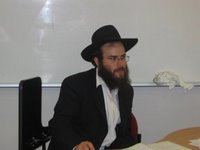
"Rabbi Yoseph Nerenberg gives a shiur
Monash Caulfield Lunchtime lectures
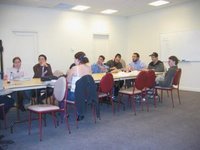
Merkos presents "Rabbi Yoseph Nerenberg"
No comments:
Post a Comment