by Rabbi Simon Jacobson
The account below was related to me personally by Reb Leibel Zisman, a living witness to these unforgettable events. Leibel's birthday is on Yom Kippur.
Yom Kippur Eve 1945/5706, Foehrenwald DP Camp, Germany.
The sun was about to set on Yom Kippur eve, the holiest day of the year.
But for us it felt like Tisha B'av. Just a few months earlier we were living, if you can call that living, it was actually dying, in the unspeakable horror that was called the Gunskirchen Lager (concentration camp) in Northern Austria. It is impossible to describe the hundreds of dead bodies strewn about everywhere you turned throughout the camp. The hunger, the stench, the death, the insanity was everywhere. The Nazis, may their names and memories be forever erased, dehumanized us, turning us into ravenous sub-humans, desperate for a drop of water. Days would go by between a morsel of bread and a paltry sip.
I was 14-years-old when we were finally liberated on May 5, 1945. Orphaned, widowed, homeless - completely alone with no place to go - we wandered in what now appears a complete fog. But it all comes back to me as I tell the story.
We - some 5,000 of us survivors - ended up in the Foehrenwald DP Camp in Germany, where we spent Yom Kippur, together with the Klausenburger Rebbe, Rabbi Yekutiel Yehudah Halberstam, who tragically lost his wife and 11 children to the German beasts.
As night was falling that Yom Kippur eve all 5,000 of us gathered in a makeshift shul for Kol Nidrei. As is the custom in many communities, the Klausenburger Rebbe stood up on the bima (the central platform) to share a few pre-Kol Nidrei words to awaken our hearts and prepare us for the awesome day ahead of us.
I will never forget what the Klausenberger Rebbe said that Yom Kippur eve over six decades ago. The moment was overwhelming.
With tears in his eyes he began by thanking G-d for saving our lives from the Nazi hell. He then pointed to his kittel - the white linen robe that we traditionally wear on Yom Kippur - and began to speak, slowly, deliberately, tearfully:
"One of the reasons we wear this kittel is because it is the traditional burial garment, in which we wrap a body before laying it to rest in the ground, as we do when we bury our parents and those that came before us. Wearing a kittel on Yom Kippur thus reminds us of our final day of judgment when we will be laid to rest. It therefore humbles and breaks our hearts, stirring us to do complete teshuva (return). The white, linen kittel is a symbol of purity that we achieve through our introspection and efforts to repair all our wrongs.
"Since the kittel reminds us of the burial shrouds of those who passed on before us," continued the Klausenberger, "why are we wearing a kittel today? Our parents and loved ones were just slaughtered without tachrichim (burial shrouds). They were buried, with or without clothes, in mass graves, or in no graves at all..."
Suddenly, the Klausenberger Rebbe began tearing off his own kittel, literally. "No kittel!" he cried out in an anguished voice. "Let us be like our parents. Let us remove our kittels, so that they can recognize us. They won't recognize us in kittels, because they are not wrapped in kittels..."
I have no words to capture the emotions pouring out of the grand Rebbe that first Yom Kippur after the horror.
Everyone gathered in the shul began to weep uncontrollably - men, women, old, young, every person in the large hall. All our anguish, all our unbearable losses, all the humiliation and dehumanization came spilling out of our guts.
It was an unforgettable sight: 5,000 people sobbing. Not sobbing; bawling. The floor was wet with the tears gushing from all our eyes.
What a stirring awakening we experienced that Yom Kippur eve, it was unbelievable.
The Rebbe's words rang in our ears, in every fiber of our broken beings - every one of us had just lost our closest relatives: fathers, mothers, brothers, sisters, uncles and aunts. We were indelibly scarred. The words rang out: "What do we need tachrichim for?! Your father, mother, brother, sister, aunt, uncle, zeide, bobbe - they are all lying mangled in mass graves. Or in no graves at all - burned to ashes... What tachrichim? What clothes? What kittel?!...
Picture the scene: The holiest night of the year. The awesome moment just before Kol Nidrei. All the Torah scrolls lifted out of the ark. 5,000 broken Jews, left shattered, orphaned without families. The saintly Klausenberger Rav standing on the bima, ripping off his kittel - "We don't need it..."
--------------------------------------------------------------------------------
What more can be said? Yet, as another Rebbe once expressed himself: "It difficult to speak, but it's more difficult to remain silent."
Today, we are blessed to enter Yom Kippur without the misery that haunted Yom Kippur in 1945, immediately after the liberation from the camps. Yom Kippur today comes amidst many blessings and comforts. We live in freedom and have achieved many levels of success. It's almost impossible to imagine that in just six decades the Jewish people have gone through such a renaissance: With the growth of Israel, advancements in Jewish education and overall prosperity. Jewish life today is nothing less than a modern miracle.
In stark contrast to 1945, we now enjoy a sumptuous meal before the holiday together with our intact families. We dress up, don our well-pressed kittels and enter our synagogues in calm and peace.
But we must never forget, we must never get caught in the trap of complacency.
Yom Kippur is upon us. And heaven and earth are our witness that we are linked today to all generations past - both a gift and a responsibility.
As the sun sets this coming Sunday evening and we put on our kittels, we have much to cry and sing about - for ourselves, our families, generations past, future generations, from the beginning of time into eternity itself.
Reprinted with permission (c) 2009 The Meaningful Life Center. All rights reserved. www.meaningfullife.com.


The Soul

G-d's Candle is Man's Soul
About Me

- Rabbi Rapp
- Melbourne, Victoria, Australia
- My aim to help students develop into proud and effective Jews empowering them to lead an optimistic, meaningful life and actualising their full potential. It is during these years at university that a strong and accessible organisation such as ours is so important. We are here to assist you.
Monash Clayton - Wednesdays 1.00 pm to 2.00pm
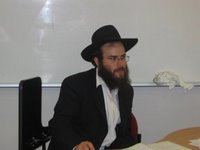
"Rabbi Yoseph Nerenberg gives a shiur
Monash Caulfield Lunchtime lectures
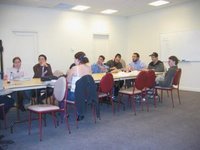
Merkos presents "Rabbi Yoseph Nerenberg"
No comments:
Post a Comment