"Economic indicators" indicate that the economy is beginning to turn around. Economists point out, though, that it still takes time to climb out of a recession like this. So even though we are hopefully in the beginning of a recovery, times may still be tough for a while.Even in the best of times, many of us sometimes find ourselves with a "cash flow" problem: It's not that we don't have money, we just don't have it right now when we need it.
Or sometimes we miscalculate, thinking we have more in the bank account than we do.
In either case, we find out that we're overdrawn. And then the bank starts charging us $30 (or more) per bounced check, and the deficit snowballs.
However, many banks offer what they call "overdraft protection." It comes in different forms, but one basic set-up is that when your checking account becomes overdrawn, there's an automatic transfer of funds from your savings account. Another version creates an instant loan. Either way, you have access to funds that prevent your checks from bouncing and protect you from being charged an overdraft fee. Overdraft protection also protects your credit.
We can look at our deeds - our thought, speech and action - as deposits or withdrawals, as an asset (a mitzva) or a liability (a transgression) in our spiritual bank account. This idea fits with the theme of Elul and Tishrei - a spiritual accounting in Elul, in preparation for the Divine audit in Tishrei.
When we do something that G-d forbids (G-d forbid!), whether in thought, speech or action, we are withdrawing funds from our spiritual bank account, so to speak. Of course, we're also making deposits, with all of the many wonderful good deeds and mitzvot (commandments) that we perform daily, as the saying goes, "Even the simplest Jew is as full of good deeds as a pomegranate is of seeds."
But still, there may be times when we are "spiritually overdrawn." For whatever reason, an accurate assessment shows that, on balance, we've got more spiritual liabilities than assets, and payment is due now.
Our Sages teach that mitzvot and transgressions are measured qualitatively as well as quantitatively. Thus, one small mitzva may outweigh tens or even hundreds of transgressions (and vice versa). It's possible that we might have a huge cache to our credit. But it's also possible that unknowingly, we may be "overdrawn": payment is due and our spiritual credit rating is suffering.
We can prevent this; we can set up a spiritual "overdraft protection," by conducting ourselves in accordance with G-d's kindnesses, that are "without limit or end." By acting with chesed - kindness and compassion, we "draw down upon ourselves the Supreme compassion" - an overdraft protection from the Source of unlimited, infinite Chesed.
How do we do this? How do we conduct ourselves with a kindness that knows no bounds? Through giving tzedeka - charity.
When we give tzedeka above and beyond the requisite amount (10%), when we give it just because and on a regular basis, we create an "overdraft protection."
This is why our Sages tell us that giving tzedeka brings redemption, both on a personal basis, during the High Holiday spiritual accounting, and also globally, that tzedeka brings the ultimate redemption of the world through Moshiach.


The Soul

G-d's Candle is Man's Soul
About Me

- Rabbi Rapp
- Melbourne, Victoria, Australia
- My aim to help students develop into proud and effective Jews empowering them to lead an optimistic, meaningful life and actualising their full potential. It is during these years at university that a strong and accessible organisation such as ours is so important. We are here to assist you.
Monash Clayton - Wednesdays 1.00 pm to 2.00pm

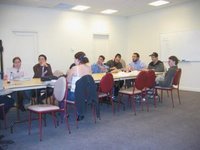
"Rabbi Yoseph Nerenberg gives a shiur
Monash Caulfield Lunchtime lectures
Merkos presents "Rabbi Yoseph Nerenberg"
No comments:
Post a Comment