This was the form of the menora: hammered work of gold, from its base to its flower it was hammered work; according to the form that the Lord had shown Moses, so did he construct the menora. (Num. 8:4)
"Beaten work of gold," explains Rashi, means that the menora was to be made of a single piece of gold, beaten or pounded with a hammer and other tools, until it assumed the proper shape. Likewise, a person who desires to transform himself into a "menora," to kindle his G-dly spark and be illuminated with the light of Torah, should also do the same to himself - striking away at his negative qualities and working on his character until he, too, assumes the proper form.
(Likutei Torah)
The base of the menora symbolizes the lowest level of Jews; the flowers, those on the highest spiritual plane. The Torah demands that the menora be made out of one piece of gold, just as the Jewish people is but one entity. Every Jew is incomplete by himself, without the rest of the Jewish nation, just as in the human body, the foot needs the head to function no less than the head requires the foot for mobility.
(Likutei Torah)
That there be no plague among the Children of Israel, when the Children of Israel approach the Sanctuary (Num. 8:19)
There are, unfortunately, those who only reach out to G-d after a misfortune has befallen them. Our aim should be, however, to approach G-d not only through suffering and sorrow, but with joy and happiness.
(Imrai Noam)
But the man Moses was very humble, more so than any man upon the face of the earth (Num. 12:3)
Rabbi Shneur Zalman of Liadi explained that Moses felt humble especially in comparison to our generation, the last generation before Moshiach. For, despite the extreme darkness that would reign immediately preceding the Final Redemption, Moses foresaw and was humbled by the self-sacrifice our generation would show to keep the Jewish faith alive even in the most difficult of circumstances.
(Sichat Purim, 5747)
The famous Chasidic rabbi, Reb Baruch, once asked his disciple, Rabbi Baruch Stuchiner, if he had as yet succeeded in locating proper accommodations in the town of Pshischa. The chasid replied that he had not yet found a place to stay. Reb Baruch responded: "One who does not 'take up space" will always be able to find a place wherever he goes."


The Soul

G-d's Candle is Man's Soul
About Me

- Rabbi Rapp
- Melbourne, Victoria, Australia
- My aim to help students develop into proud and effective Jews empowering them to lead an optimistic, meaningful life and actualising their full potential. It is during these years at university that a strong and accessible organisation such as ours is so important. We are here to assist you.
Monash Clayton - Wednesdays 1.00 pm to 2.00pm
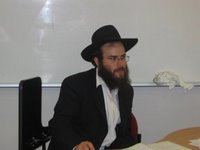
"Rabbi Yoseph Nerenberg gives a shiur
Monash Caulfield Lunchtime lectures
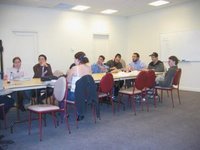
Merkos presents "Rabbi Yoseph Nerenberg"
No comments:
Post a Comment