...But it was clear to all that before any decisive move would be made, the Rebbe had to be consulted. Nothing would be done without his knowledge and consent. All awaited the telegram from "there," from New York, but the telegram was inexplicably not forthcoming. Four days had passed since the terror had struck. A lengthy telegram had immediately been dispatched informing the Rebbe of all the details of the tragedy, and an answer was expected that very night. But the Rebbe was silent. What happened, many wondered, why doesn't he respond? Has he not a word of comfort for his stricken followers?
A telegram from the Rebbe, it should be clarified, is an integral part of Chabad-Chassidic life across the globe. Every problem, every decision pertaining to the communal or private life of the Lubavitcher chassid is referred to the Rebbe's headquarters in Brooklyn, and whatever the reply, that is what is done. And the answer is always forthcoming, whether by regular post, express mail, or emergency telegram-depending upon the urgency of the matter-and always short, succinct, and to the point.
Why, then, is the Rebbe's answer on such a fateful matter tarrying? The village elders had no explanation, and, as the hours and days went by, the question continued to plague their tormented souls, and their anguish and despair weighed increasingly heavier on their hearts.
The Telegram
And then, five days after the tragedy, the telegram arrived. The news spread throughout the village: A telegram from the Rebbe! The telegram has arrived! The entire village, men, women and children, assembled in the village square to hear the Rebbe's reply.
And the Rebbe was characteristically succinct. The telegram contained a single sentence-three Hebrew words-but these three words sufficed to save the village from disintegration and its inhabitants from despair. Behemshech habinyan tinacheimu, wrote the Lubavitcher Rebbe, Rabbi Menachem Mendel Schneerson. "By your continued building will you be comforted."
The Chassidim of Kfar Chabad now had a firm grasp on their future: they knew what they had to do. They must build! The Rebbe said to build! And that by their continued building they will be comforted! That very night the village elders held a meeting to discuss how the Rebbe's directive might be implemented. After a short discussion, a decision was reached: a vocational school will be built where children from disadvantaged backgrounds will be taught the printing trade. On the very spot where the blood was spilled, the building will be raised.
The Rebbe Knew
The next morning, all residents of the village gathered at the empty lot adjoining the agricultural school and began clearing and leveling the land in preparation for the building. The joy was back in their eyes.
In the weeks that followed, letters arriving from relatives and friends in New York described what had transpired there in those four endless days in which the village had awaited the Rebbe's reply.
For the entire month of Nissan, the month of the redemption, it is the Rebbe's custom to devote himself entirely to the service of the Creator, reducing his contact with his Chassidim to a minimum. Rare is the individual who is granted an audience with the Rebbe in this period, and all but the most urgent correspondence is postponed until the close of the auspicious month.
When the month of Nissan ends, a festive farbrengen (Chassidic gathering) is held at the Rebbe's headquarters on Eastern Parkway in Brooklyn, marking the Rebbe's resumption of his involvement with his thousands of followers across the globe. The Rebbe speaks for hours, his talks interspersed with bouts of song and l'chaims, often until the wee hours of the morning.
That year, the farbrengen marking the close of Nissan was also held. The tragic news from the Holy Land had arrived in New York moments before the farbrengen was scheduled to begin, but the Rebbe's secretaries decided to withhold the news from him until after the gathering. But what his assistants did not tell him, his heart seems to have told him. That night, the Rebbe spoke of Jewish self-sacrifice and martyrdom al kiddush Hashem (for the sanctification of G-d's name), about the rebuilding of the Holy Land, and the redemption of Israel. Tears flowed from his eyes as he spoke. All night he spoke and wept, sang and wept, and wept still more.
Why is the Rebbe weeping? Only a few of those present could guess-those who knew about the telegram from Kfar Chabad.
The farbrengen ended. The chassidim dispersed to their homes, and the Rebbe retired to his room. With great trepidation, two of the Rebbe's closest chassidim knocked on the Rebbe's door and handed him the telegram from Israel. The Rebbe sank into his chair. He locked his door and did not open it for three days. After three days of utter seclusion, he called his secretary and dictated his reply: Behemshech habinyan tinacheimu. By your continued building you will be comforted.
The chassidim of Kfar Chabad have fulfilled their Rebbe's request. Without the aid of philanthropists or foundations, they have raised 50,000 Israeli pounds, and today, one year after the tragedy, the new building of the vocational school is completed.
Tomorrow, as the citizens of Israel celebrate their eighth Independence Day, the chassidim of Kfar Chabad will hold a farbrengen and relate, again and again, the story of the three-word telegram that saved the village.
(Source: by Menachem Barash, for Yediot Achroinoit an Israeli daily, Sunday, May 5, 1957 via Chabadnews.us)


The Soul

G-d's Candle is Man's Soul
About Me

- Rabbi Rapp
- Melbourne, Victoria, Australia
- My aim to help students develop into proud and effective Jews empowering them to lead an optimistic, meaningful life and actualising their full potential. It is during these years at university that a strong and accessible organisation such as ours is so important. We are here to assist you.
Monash Clayton - Wednesdays 1.00 pm to 2.00pm
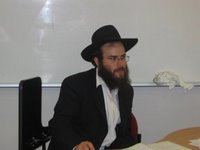
"Rabbi Yoseph Nerenberg gives a shiur
Monash Caulfield Lunchtime lectures
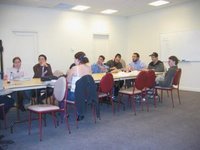
Merkos presents "Rabbi Yoseph Nerenberg"
No comments:
Post a Comment