Reb Pinchas of Koritz was beloved by all the inhabitants of his city.
People would seek out his wise counsel on a variety of matters. As a result, Reb Pinchas' schedule became overburdened. He no longer had the time to study and pray as he desired.
Turning to G-d in prayer, he petitioned: "Make people hate me. Let them flee my company so I will have time to pray and study."
Reb Pinchas' prayer was accepted and people began to shun him. They would not speak to him or do favors for him. Reb Pinchas, however, was happy. He was able to focus on his Divine service without distraction.
Then came the holiday of Sukot. Reb Pinchas desired to have guests, but no one wanted to come to his house. He was unhappy, for on the festival it is a mitzva (commandment) to have guests grace one's table.
Ultimately, however, he accepted the fact. It was better to lack guests for the holiday than to be disturbed the entire year.
On Sukot, our Patriarchs Abraham, Isaac, and Jacob, together with Joseph, Moses, Aaron, and King David, visit the sukot of the Jewish people. As Reb Pinchas was about to enter his suka, he saw our father Abraham waiting outside.
"Welcome to my suka," Reb Pinchas told him.
"Sorry, I will not enter," Abraham replied.
"Why?"
"Well, if none of my descendants feel at home as guests here, I don't think I will either."
That was enough for Reb Pinchas. He prayed for his original good graces to be restored and for him to find favor in people's eyes again.
The Torah commands: "For seven days you shall dwell in sukot." In defining this mitzva, our Sages explain that for the duration of the holiday, these small huts with roofs of branches and leaves must be considered as our homes. All of our daily routines should be carried out within them. As our Sages explain: "A person should eat, drink, relax...
and study in the suka."
Proverbs tells us to "Know Him in all your ways"; and our Sages comment, "This is a short verse upon which all the fundamentals of the Torah depend."
For G-dliness is present not merely in the synagogue or in the house of study, but in every dimension and corner of our lives. This concept becomes manifest through dwelling in a suka. The suka teaches us that every aspect of our conduct can serve as a means to relate to Him and become linked with His oneness.
The unity established by this mitzva resolves the differences that exist between spirituality and material existence. Usually, we see the two as opposite. Spirituality, we often think, is otherworldly in contrast to physicality which is tangible and real. From G-d's perspective, however, both the material and the spiritual are expressions of Himself and can be fused harmoniously. Living in a suka helps us adopt this mind frame and attune ourselves to this inner unity.


The Soul

G-d's Candle is Man's Soul
About Me

- Rabbi Rapp
- Melbourne, Victoria, Australia
- My aim to help students develop into proud and effective Jews empowering them to lead an optimistic, meaningful life and actualising their full potential. It is during these years at university that a strong and accessible organisation such as ours is so important. We are here to assist you.
Monash Clayton - Wednesdays 1.00 pm to 2.00pm

"Rabbi Yoseph Nerenberg gives a shiur
Monash Caulfield Lunchtime lectures
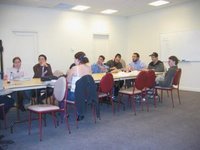
Merkos presents "Rabbi Yoseph Nerenberg"
No comments:
Post a Comment