And Moses went (Deut. 31:1)
"To the study hall," adds the Targum Yonatan. Before addressing the Jewish people, Moses went to the study hall to study the matter he was about to impart. From this we learn that a person mustn't rely on his own memory and knowledge when it comes to rendering legal decisions.
Rather, he must first consult books of Jewish law before issuing a ruling.
(The Lubavitcher Rebbe)
* * *
You shall read this Torah before all of Israel (31:11)
Every seven years, when the Jewish people gathered together in Jerusalem as one entity, the king would read aloud to them the Written Torah. For the Written Torah, as opposed to the Oral Law, is the equal possession of all and thus unifies all Jews; just by reciting the words a person fulfills the mitzva of Torah study, even if he does not understand their meaning.
(Likrat Shabbat)
* * *
Assemble ("Hakhel") the people, the men and the women and the little ones (Deut. 31:12)
The Sabbatical year (in which the land lies fallow and debts are declared in remission) brings with it peace and unity, as it blurs the distinctions between rich and poor. In the Sabbatical year all Jews are equal, rendering them worthy of the commandment of Hakhel (the grand assemblage on Sukot during which the king reads aloud certain portions of the Torah).
* * *
Now therefore write this song for yourselves, and teach it to the children of Israel (Deut. 31:19)
From this verse our Sages learn that every Jew is obligated to write for himself a Torah scroll (or hire someone else to do so for him).
Nowadays, when we no longer study the Torah from an open scroll and writing the Oral Law is permissible, a Jew fulfills this obligation by purchasing holy books, for indeed the mitzva is to "teach it to the children of Israel."
In the past, many Jews were not strict about fulfilling this mitzva as there was generally only one Torah scroll in a community; thus it was assumed that it had been written for everyone. However, at the behest of the Rebbe, many Torah scrolls are now being written in which a person may purchase a letter and become a partner in its writing.


The Soul

G-d's Candle is Man's Soul
About Me

- Rabbi Rapp
- Melbourne, Victoria, Australia
- My aim to help students develop into proud and effective Jews empowering them to lead an optimistic, meaningful life and actualising their full potential. It is during these years at university that a strong and accessible organisation such as ours is so important. We are here to assist you.
Monash Clayton - Wednesdays 1.00 pm to 2.00pm
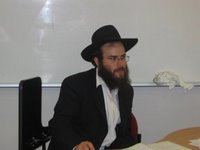
"Rabbi Yoseph Nerenberg gives a shiur
Monash Caulfield Lunchtime lectures
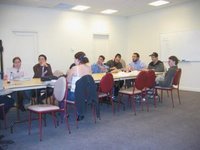
Merkos presents "Rabbi Yoseph Nerenberg"
No comments:
Post a Comment