of the month, when it was to be slaughtered as the Passover offering.
When their Egyptian neighbors became curious, the Jews explained that the sacrifice was preparatory to the tenth and final plague G-d would visit on the Egyptians - the slaying of the firstborn.
Hearing this, the firstborn sons panicked. They stormed Pharaoh's palace, demanding that he free the Jews. When he refused, civil war broke out in Egypt. Sons fought against fathers and many died, as it states in Psalms, "To Him Who smote Egypt through their firstborn" - the Egyptian firstborn themselves were the instrument of Egypt's destruction.
This miracle is commemorated each year on "Shabbat Hagadol," the Shabbat immediately preceding Passover, as the miracle itself took place on Shabbat that year.
Yet ever since then, Shabbat Hagadol does not necessarily fall on the 10th of Nissan; the deciding factor in commemorating the miracle is that it be on Shabbat.
This commemoration differs from all other celebrations on the Jewish calendar, which are generally determined according to the day of the month. What is so special about Shabbat Hagadol that it follows a different pattern?
An essential difference exists between the days of the week and of the month. The seven days of the week are determined by the sun, according to the natural order G-d put into motion during the seven days of Creation. The days of the (Jewish) month, however, are determined by the phases of the moon, whose movements are not subject to nature in the same way.
These two ways of determining the passage of time, solar and lunar, reflect the two ways G-d oversees the world - within and outside of nature - the seemingly natural occurrence and the miracle.
In fact, the Hebrew word for "month" - "chodesh" - expresses this concept, for it is related to the word "chadash" ("new"), signifying that the lunar phases are subject to change.
For this reason, Jewish holidays are celebrated according to the day of the month, as they commemorate G-d's supernatural intervention with the laws of nature.
The miracle of Shabbat Hagadol, however, was not supernatural, but of an entirely different sort, one in which evil itself fought to eradicate its own existence. Fearing for their own lives, Egyptian fought against Egyptian, waging war in order to free the Jewish slaves.
A miracle such as this, occurring within nature, is therefore connected to the day of the week and not the day of the month.
This concept will be better understood when Moshiach comes, speedily in our day, for the G-dliness that exists within nature will then be openly revealed and not seen as a separate entity.
Adapted from Likutei Sichot of the Rebbe, Vol. 27


The Soul

G-d's Candle is Man's Soul
About Me

- Rabbi Rapp
- Melbourne, Victoria, Australia
- My aim to help students develop into proud and effective Jews empowering them to lead an optimistic, meaningful life and actualising their full potential. It is during these years at university that a strong and accessible organisation such as ours is so important. We are here to assist you.
Monash Clayton - Wednesdays 1.00 pm to 2.00pm
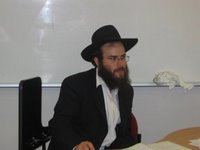
"Rabbi Yoseph Nerenberg gives a shiur
Monash Caulfield Lunchtime lectures
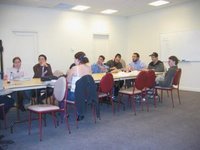
Merkos presents "Rabbi Yoseph Nerenberg"
No comments:
Post a Comment