Question of the Week:
I am filling out my driver's license forms and have a question: What is the Jewish view of organ donation? I have heard here are issues with it. But I thought saving a life is the greatest thing one can do. So what's the story?
Answer:
Judaism holds life as being sacred. For this reason, donating an organ to save a life is the highest act of virtue one can do. But sometimes, precisely because life is sacred, organ donation is problematic.
Jewish law distinguishes between donating organs during your lifetime and organ donation after death. While you are alive, to donate an organ that you can live without, like a kidney, or parts that will replenish themselves, like bone marrow or blood, in order to save or vastly improve another life is one of the greatest acts you could do.
In theory, the same should apply to donating organs after death. Being that saving lives overrides almost any other moral concern, the opportunity to do so after our death should be not only acceptable but even obligatory. So for example, though the Torah commands us to be buried whole, this command would step aside for the greater command to save lives.
But in practice, consenting to have your organs removed after death presents some heavy problems.
It is forbidden to tamper with a corpse in any way unless it is in order to directly save a life. But when you sign a consent form to have your organs removed, not all of those organs will necessarily be used for an immediate transplant. They may be used for research, or stored away, or even discarded if not needed. Jewish law only allows organ donation if it can be ensured that the organs will indeed be used to save lives.
But there is a much more serious concern. To be usable in a transplant, most organs have to be removed while the heart is still beating. But Jewish law maintains that if the heart is still beating, the person is still alive. The moment of death is defined as when the heart stops. So to remove organs from a brain dead patient while the heart is still beating is tantamount to murder.
While the medical and legal world has accepted brain death as a new definition of death, the vast majority of experts in Jewish law have not. To tamper with the definition of death is to start on a path that can lead to major ethical problems.
Imagine a case where 89 year old patient X is partially brain dead and, according to the doctors, certainly going to die. Patient Y in the next bed, aged thirty five, urgently needs a heart transplant. Why not pronounce X dead now rather than risk losing both patients? It may sound reasonable, but it is taking one life to save another. For those who see life as sacred, this is unconscionable.
Some countries offer an option to give consent to organs being removed on condition that a rabbi is consulted beforehand, who will ascertain that they will only be removed after absolute death and be used only to save lives. In Australia there is no such option as yet. So as long as this is the case, we don't consent to the removal of organs after death.
This is a life and death question. We need higher wisdom to guide us. I wouldn't want to have to decide what is right and wrong based on my own subjective opinion and feelings. Thank G-d we have the Torah to give us clarity in these ultimate issues.
Good Shabbos,
Rabbi Moss


The Soul

G-d's Candle is Man's Soul
About Me

- Rabbi Rapp
- Melbourne, Victoria, Australia
- My aim to help students develop into proud and effective Jews empowering them to lead an optimistic, meaningful life and actualising their full potential. It is during these years at university that a strong and accessible organisation such as ours is so important. We are here to assist you.
Monash Clayton - Wednesdays 1.00 pm to 2.00pm
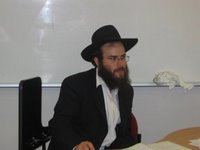
"Rabbi Yoseph Nerenberg gives a shiur
Monash Caulfield Lunchtime lectures
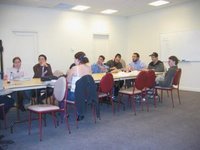
Merkos presents "Rabbi Yoseph Nerenberg"
No comments:
Post a Comment