From a letter of the Lubavticher Rebbe
The central and focal point of this month is the New Year for Trees, which brings to mind the well-known Biblical analogy, "Man is like a tree," an analogy that embraces many aspects, general and particular.
Since this analogy is given by the Torah, the Torah of Truth, it is certain to be precise in all its aspects, each of which is instructive in a general or particular way, for every one of us, man and woman.
For such is the purpose of every detail of the Torah (meaning,
"instruction") - to induce everyone to reflect on it and derive practical instruction from it in everyday life.
Accordingly, I will refer to some general points of the said analogy.
To begin with, the essence of a living tree is, above all, that it grows; its growth being the sign of its being alive.
The purpose of a tree is to be - in the words of the Torah - "a fruit-tree bearing fruit after its kind, whose seed is within itself,"
which is, to produce fruit with seeds from which will grow trees and fruits of the same kind.
Indeed, the perfection of a tree lies in its ability to produce trees and fruits to all posterity.
To translate the above points in human terms:
A human being must grow and develop continuously, however satisfactory the level may be at any given time. This is also indicated in the expression of our Sages - whose sayings are concise but profoundly meaningful - ma'alin b'kodesh, "holiness should be kept on the ascendancy."
Similarly in regard to the second point: A human being should produce "fruits" for the benefit of many others beside himself; the kind of benefit which is coupled with delight.
The meaning of "delight" in this context will become clear from the distinction in regard to the seven species of produce with which the Land of Israel is praised in the Torah: A land of wheat and barley, and vine, and fig, and pomegranate, a land of olive oil and (date) honey."
Wheat and barley are basic goods necessary for human sustenance, while the fruits of trees are both sustaining and nourishing as well as enjoyable and delightful.
And the third point: One must strive to produce "fruit-bearing fruits,"
so that the beneficiary enjoying these fruits should in turn become a "fruit-bearing tree" like the benefactor.
Needless to say, the "fruits" of which we are speaking here, are those which our Sages specify, saying, "the fruits of Tzadikim [the righteous] (which includes every Jew and Jewess, as it is written, "And Your people are all Tzadikim") are mitzvos [commandments] and Good Deeds."
These are some of the basic teachings of the New Year for Trees, which have an immediate practical relevance to each and every Jew, man and woman. There is a further allusion to this in the meaningful Jewish custom to eat on this day various kinds of fruits which grow on trees.
And when a Jew firmly resolves to proceed from strength to strength in all matters of Torah and mitzvos, both in regard to himself and in disseminating them in his environment, he has the assurance of realizing his fullest potential - "like a tree planted by streams of water, that brings forth its fruit in its season; its leaf also shall not wither, and whatever he does shall prosper."
Until the time will be ripe for the fulfillment of the promise, "the tree of the field shall yield its fruit," in the plain sense, meaning that even non-producing fruit trees shall produce fruits.


The Soul

G-d's Candle is Man's Soul
About Me

- Rabbi Rapp
- Melbourne, Victoria, Australia
- My aim to help students develop into proud and effective Jews empowering them to lead an optimistic, meaningful life and actualising their full potential. It is during these years at university that a strong and accessible organisation such as ours is so important. We are here to assist you.
Monash Clayton - Wednesdays 1.00 pm to 2.00pm
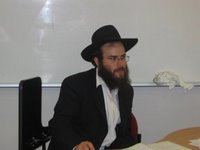
"Rabbi Yoseph Nerenberg gives a shiur
Monash Caulfield Lunchtime lectures
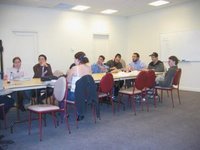
Merkos presents "Rabbi Yoseph Nerenberg"
No comments:
Post a Comment