by Miriam Karp
Gershon Wachtel knows prayer and music, up close and personally. Through deep prayer and music, Gershon has found the strength to live and even flourish after the tragic drowning of his four-year-old son, some 13 years ago.
A classical pianist, Gershon has woven the fascinating story of the many twists and turns of his life and journey into a one-man show, "Overcoming Life's Difficulties with Faith and a Sense of Humor." Combining masterful and sensitive musical interludes with an absorbing narrative, both poignant and filled with humor, Gershon shares his event-filled life, starting from his childhood in a non-observant family of the 50s in the small Jewish community of Niagara Falls, New York.
When Gershon, then Gary, was ten, his mother enrolled him in piano lessons, and he took off, flying into the world of music. "No matter what was swirling around me, I could go to this magical world and just be there... I would send myself off to faraway places and go to places that no one's ever been to before. And I still go to those places."
Gershon poured out his soul through his music, but knew little about Judaism. He describes the many small miracles and funny anecdotes that shaped his growth. At 21, he suddenly "wanted to be more Jewish. Something fell into my Jewish soul." About to leave for a tour of study at the Mozarteum University of Music and Dramatic Arts in Salzburg, he overheard some Hebrew while grabbing a bite at a Burger King. "Hebrew! I should be going to Israel!" He nixed the Austria plans and headed for a kibbutz. The bit of Hebrew he picked up, the glimpse into tefilin and a new Jewish world, whet his appetite for more.
Gershon "had all these amazing Jewish feelings, and I didn't know what to do with them. I would go and buy wine and challa and eat them on Friday night not knowing there was any prayer involved." He happened to meet Rabbi Nosson Gurary of the Buffalo Chabad House, and offered the rabbi a challenge: "If you know the Torah, you know everything, because everything is found in the Torah. I want you to teach me Torah."
Thus began a warm mentoring friendship that has stretched over 35 years.
Gershon met his wife Chaya in Buffalo, and they soon moved to Toronto to have the resources of a larger Jewish community. They were busily engaged with building their family of 12 children, celebrating holidays and dealing with all the bumps and bruises of family life. Till one summer's day in 1994, when visiting a child at summer camp, four-year old Pinchas wandered away and drowned.
"Rivers of tears were cried." Gershon vowed he would never play again. He reached the point where he knew with absolute certainty he would not survive the pain. "I told my wife, 'I can't live.' And I really meant it. But, guess what? I am alive!"
In his performances, Gershon makes it clear to his audience that he's not looking for sympathy. He shares the personal tragedy to bring home his message of hope and acceptance, and the power of the heart to heal.
While Gershon defined himself as a pianist, his daily life revolved around his occupation as a kosher manager, later as the owner of an insurance agency, and his rich family and religious life. Five years ago, something changed. "I came to a standstill. I realized I needed more than carpool, shul, kids, dinner, and homework week-by-week, year-by-year. After several days of intensive introspection, I decided to go back to piano lessons and get a Masters in piano.
"I found a very special Russian teacher who brought me to a whole new level. I told myself, 'Don't be smart, drop what you think you know and follow whatever she does.' She taught me different techniques. Most important, she helped to emotionally understand what music really is. I used to play with bravado and passion. Now I have a new sensitivity, which is not the same thing.
"My son Pinchy had a smile that would light up the world. For years after his death I was occupied with a question, 'Where does love go? Where do all those smiles go after one leaves this world?" I asked many people but never got a satisfactory answer. On Pinchy's 13th birthday, what would have been his Bar Mitzva, we made a Torah dedication ceremony and turned a difficult day into a simcha and celebration. At the celebratory meal I asked this question to the audience. A unique friend, a Hell's Angel biker with a very spiritual soul got up.
" 'Up there in heaven,' he said, 'there's a pool of smiles, love, kindness. Sometimes there's a person who's especially good at one of these things. They have the key to access that pool and draw them down into this world. When they're gone, the smiles and love don't evaporate or disappear; they return to the pool, from which someone else can access them!' I just knew in my gut, he was right; this was the answer.
"I've come to see that music is the same way. Music is all around us, it's universal and touches each person in a very deep place. What does a musician do? He has that key, and can focus or be a channel for that flow, it comes into the world through him, and comes out through the other side of his soul.
"Music is a huge palette; everything is there. I'm really privileged to be able to connect to G-d in this way. I often play for an hour before I pray. When I play I can really feel my soul and I know I am connecting. When something is really bothering me and I need help, I play, and I pray.
Gershon feels his calling in life is to share his message of hope and inspiration through the gift of his unique access to that heavenly pool of soul music.


The Soul

G-d's Candle is Man's Soul
About Me

- Rabbi Rapp
- Melbourne, Victoria, Australia
- My aim to help students develop into proud and effective Jews empowering them to lead an optimistic, meaningful life and actualising their full potential. It is during these years at university that a strong and accessible organisation such as ours is so important. We are here to assist you.
Monash Clayton - Wednesdays 1.00 pm to 2.00pm
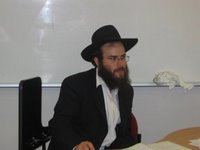
"Rabbi Yoseph Nerenberg gives a shiur
Monash Caulfield Lunchtime lectures
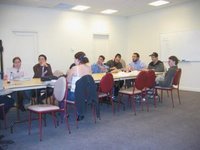
Merkos presents "Rabbi Yoseph Nerenberg"
No comments:
Post a Comment