Hand-washing and hand-wringing - two closely associated activities. One indicates cleanliness, courtesy, attention to details and to health. The other indicates indecision, weakness of character, even fear or guilt.
It's almost as if we wring our hands when we can't wash our hands - when we are dirty - physically, emotionally, psychologically - and can't rid ourselves of the dirt, we wring our hands. When we can cleanse ourselves, we are no longer insecure and on edge.
A new scientific study confirms the power within washing our hands, how the simple act gives us ease of mind, and makes us comfortable with our choices.
The study focused on how we react after we make a decision. It is human nature to want to be right. So once we make a choice we often rationalize our decision, to make ourselves comfortable with what we have decided - even beyond reason.
This difference in perception - between what we know we did and how we wish to view our decision - is called "cognitive dissonance" - call it the perceived distance between desire and reality. (There may be none, but if we perceive a gap, for us, it's there.)
Scientists conducted an experiment, testing the effect of hand washing on cognitive dissonance.
It reduced it. In other words, people who washed their hands after making a decision were more comfor-table with the choices they had made.
One of the scientists concluded that the "hand-washing effect" applies not only to "intense, morally profound situations, but that it reduces the influence of past behaviors and decisions that have no moral implications whatsoever."
Nevertheless, we know that Judaism teaches that no act, no behavior, no decision is without moral implication. Everything we do - indeed, everything we say or think - has, by definition, a moral implication, since being moral is what truly distinguishes a human being. A moral person - a person of mitzvos - is an individual aware of the potential goodness or holiness in every act, every word, every thought.
And so we should not be surprised that the Torah and our Sages were aware that hand-washing has a transformative power - not just the potential to clean the dirt off our hands, but to remove the spiritual impurities we may have collected, even unwittingly, throughout the day.
In Temple times, the priests had to perform a ritual washing of the hands before performing the service in the Temple - perhaps symbolizing the removal of spiritual doubts and uncertainties. And today, before we eat a meal with bread, before making the HaMotzi blessing, we too wash our hands, in a way bringing our perception - that the world is a separate independent existence - more in line with the reality that the world is dependent on the G-dly force that gives it life.
And, from one perspective even more significant, our Sages instituted a ritual washing of the hands immediately upon waking - without a blessing, before getting dressed, even, if possible, before getting completely out of bed! (For this reason, many keep a cup and basin by their bedside.)
This wake-up washing removes the spiritual impurities that accumulated during the night, removes, at least ritually, the moral doubts, and allows us to declare, with the first words out of mouth, Modeh Ani - I offer thanks to You, living and eternal King, for You have mercifully restored my soul within me; Your faithfulness is great.


The Soul

G-d's Candle is Man's Soul
About Me

- Rabbi Rapp
- Melbourne, Victoria, Australia
- My aim to help students develop into proud and effective Jews empowering them to lead an optimistic, meaningful life and actualising their full potential. It is during these years at university that a strong and accessible organisation such as ours is so important. We are here to assist you.
Monash Clayton - Wednesdays 1.00 pm to 2.00pm
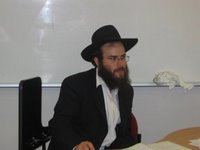
"Rabbi Yoseph Nerenberg gives a shiur
Monash Caulfield Lunchtime lectures
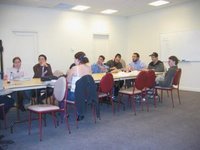
Merkos presents "Rabbi Yoseph Nerenberg"
No comments:
Post a Comment