Rabbi Chanina ben Dosa came to study Torah under Rabbi Yochanan ben Zakkai, when Rabbi Yochanan ben Zakai’s child fell ill. Said Rabbi Yochanan to Rabbi Chanina: “Chanina, my son, pray for mercy for [my child], that he may live.” Rabbi Chanina placed his head between his knees and prayed, and the child lived.
Said Rabbi Yochanan ben Zakai: “Had the son of Zakai rammed his head between his knees all day, they still would not have been merciful toward him.” Asked his wife: “Is Chanina greater than you?” Said Rabbi Yochanan to her: “No, but he is like a servant of the king (who enters into the king’s presence all the time, without special permission), while I am like a minister of the king (who sees the king only by appointment, when the occasion warrants).”
Talmud, Berachot 34b; Rashi, ibid.
The minister serves his king with his mind; the servant serves him with his body. Therein lie their respective advantages over each other.
The minister’s contribution is based on his qualities: qualities that differ from individual to individual, and from time to time and from circumstance to circumstance in a single individual. Thus, the relationship of the minister with his king is of a higher “quality” than that of the servant; but it is also a fluctuating relationship which shifts in accordance with his capacity to contribute in his particular field.
The servant, on the other hand, attends to everyday, commonplace things. He serves the king not with his mind or his character, but with his elementary being. His role might be less prestigious than the minister’s, but its very simplicity is what makes it constant and unchanging and places him in the king’s presence at times when no one else would be admitted.
Our service of the Creator includes both these elements, as embodied by the two basic endeavors of Jewish life: the study of Torah, and the observance of the divine commandments, the mitzvot.[1]
With the study of Torah, we serve G-d as a minister serves his king: with our mind and intellect. We strive to comprehend the divine wisdom, and have even been given a mandate to develop and apply it.[2] The mitzvot, on the other hand, are physical deeds: giving money to charity, binding tefillin on the arm and head, eating matzah on Passover, and sounding the shofar on Rosh Hashanah. Of course, the study of Torah is not confined to prodigies and intellectuals, and a mitzvah should be performed with an awareness of the significance of man’s fulfillment of the divine will in general, and the qualities of the specific mitzvah in particular. Nevertheless, the essence of Torah study is the mind’s effort to assimilate the supernal wisdom, while the observance of a mitzvah is, first and foremost, the commitment of one’s physical being to the serve one’s Master.
Created and Formed
The Ethics of the Fathers quotes Rabbi Yochanan ben Zakai as one who would always say[3]: “If you have learned much Torah, do not take credit for yourself—it is for this that you have been formed.”[4]
A similar saying appears in the closing mishnah of the Talmudic tractate Kiddushin, where Rabbi Shimon ben Elazar states: “I was created to serve my Creator.”[5] Both these sayings express the concept that the purpose of our existence is to serve G-d, whether through the study of Torah or as a “servant” who carries out his master’s commands. It is significant, however, that each of these sayings use a different word to describe our coming into being. Rabbi Yochanan ben Zakai, whose primary role was that of a “minister of the king” (as in the story quoted above),[6] tells us that we have been “formed” in order to study G-d’s Torah. But when the Talmud speaks of our duty to serve G-d, it tells us that this is the purpose for which we have been “created.”
There are two aspects to every existence: its “substance” (chomer), which is the “thing in itself,” and its “form” (tzurah)—the various qualities and attributes it possesses. The Hebrew word beriah (“creation”) is a term that relates exclusively to the creation of something ex nihilo (something from nothing)—i.e., the coming into being of the essence of the thing.[7] Yetzirah (“formation”) means the forming of a substance into a particular shape and configuration. Thus, we were “created to serve our Creator,” for it is with the most basic aspect of our being that we serve G-d through the fulfillment of his commandments. Our study of Torah, on the other hand, is the way in which we utilize our uniquely human “form”—our capacity for intelligence and speech—to relate to G-d; hence, “If you have learned much Torah... it is for this that you have been formed.”
Both these venues are indispensable to the optimal fulfillment of our mission in life. Obviously, it is our “form” that sets us apart from all other creations, and which represents the highest actualization of our potential. On the other hand, our faculties and talents are always in a state of flux, forever subject to the myriad conditions that affect our inner lives. It is the basic, simple fact of our being that is absolute and immutable, and is the source of our deepest, truest manner of connection with G-d: as servants whose intimacy with their king is greater than that of the most accomplished minister.
Based on an address by the Rebbe, Av 1, 5737 (July 16, 1977)
Hammered Gold
And G-d spoke to Moses, saying: Speak to Aaron and say to him: When you light the lamps, the seven lamps shall give light toward the body of the menorah... And this was the work of the menorah: it was of a single piece of beaten gold, from its base to its flower...
Numbers 8:2-4
When G-d spoke these words to Moses, He had already given him detailed instructions regarding the construction and the lighting of the menorah in the Holy Temple.[8] Here, G-d reiterates two laws:
a) That the menorah’s lamps should all be turned in the direction of the “body” of the menorah (the central stem from which the menorah’s arms extend).
b) That the entire menorah—eighteen handbreadths high, its body and six arms embellished with twenty-two goblets, eleven balls and nine flowers—be hammered out of a single block of gold.
The menorah represents the people of Israel—G-d’s “light unto the nations.”[9] Its multiple limbs and forms attest to the fact that the Jewish nation is comprised of br turned tribes and includes individuals from all walks of life. But they all form an integral whole, a single people with a single calling: to illuminate the world with the light of G-d.
The menorah’s integrity was expressed on two levels: in the making of the menorah and in the way it was lit. An artifact of such complexity is usually fashioned by first molding its various parts and then welding them together. The menorah, however, was hammered out of a single piece of gold, originating as a single object and remaining a single object through the various stages of its construction to the finished product. Its second mark of unity concerned the manner of its lighting: although the menorah shed its light with seven lamps, each supported by its distinct stem or branch, they all faced the body of the menorah.
There are nations and communities that are a coalition of variant groups, each formed by its own genealogy and experience and welded together by common interest and habitat. Not so the Jew: all souls of Israel are of a single essence, and their division into distinct individuals is merely their investment into different bodies and physical lives.[10] And while the singular soul of Israel shines not with a single light, but via a seven-lamp candelabra representing the various prototypes of human character, all lamps of the menorah face the body from which they extend, emphasizing their singular origin and their singular goal.
These are the two essential laws of the menorah: that it should be forged of a single piece of gold, and that its diverse lights should face each other in harmony with their source. As we strive to illuminate our surroundings, there must be the ever-present awareness of our intrinsic oneness, coupled with an assertion of our individual talents in concert with each other and in fidelity to our mission and identity.
Based on an address by the Rebbe, Shabbat Parshat Behaalot’cha, 5730 (June 20, 1970)[11]
[1]. Although the study of Torah is itself one of the 613 mitzvot, “Torah” and “mitzvot”—the study of the divine law and its practice—constitute the two complementary components of Jewish life. See Talmud, Kiddushin 40b; Tanya, part I, ch. 4-5; ibid., part IV, section 20; et al.
[2]. See Deuteronomy 17:10-11; Talmud, Bava Metzia 59b; Midrash Rabbah, Shemot 27:7; Zohar, part I, 12b.
[3]. See Bartinura on Ethics of the Fathers 1:2.
[4]. Ethics of the Fathers 2:8.
[5]. Talmud, Kiddushin 82a.
[6]. It is also told of Rabbi Yochanan ben Zakai that “he never moved four cubits (approx. six feet) without Torah” and that “no man ever arrived before him in the study hall” (ibid., Sukkah 28a). It was Rabbi Yochanan who saved the Torah with his plea to Vespasian, the Roman general who destroyed Jerusalem and the Holy Temple, “Give me Yavneh and its sages” (ibid., Gittin 56b).
[7]. Nachmanides, Genesis 1:1.
[8]. Exodus 25:31-40, 27:20-21 and 30:7-8; Leviticus 24:1-4; et al.
[9]. Isaiah 42:6, et al.
[10]. Taamei Hamitzvot (Arizal), Parshat Kedoshim; Tanya, part I, ch. 32; et al.
Thus the Chida explains the Talmudic expression, “a convert who converted” (ger shenit’gayer, as opposed to “a non-Jew who converted,” etc.): a convert to Judaism is not one who “joined” the fold, but one who possessed a potential Jewish soul all along (Midbar Kedemot 3:3).
[11]. Likkutei Sichot, vol. XXVIII, pp. 65-66.


The Soul

G-d's Candle is Man's Soul
About Me

- Rabbi Rapp
- Melbourne, Victoria, Australia
- My aim to help students develop into proud and effective Jews empowering them to lead an optimistic, meaningful life and actualising their full potential. It is during these years at university that a strong and accessible organisation such as ours is so important. We are here to assist you.
Monash Clayton - Wednesdays 1.00 pm to 2.00pm

"Rabbi Yoseph Nerenberg gives a shiur
Monash Caulfield Lunchtime lectures
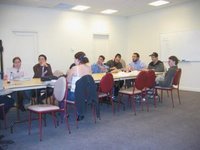
Merkos presents "Rabbi Yoseph Nerenberg"
No comments:
Post a Comment