The Torah portion of Emor opens with a warning to the kohanim (priests) not to become defiled through contact with a dead body: "Say to the priests, the sons of Aaron, and say to them: ‘There shall be none defiled for the dead among his people.’" The famous commentator Rashi explains that the Torah repeats the word "say" - "to warn the adults with regard to the children."
This is not the only instance in which adults are commanded to ensure that children observe certain mitzvot (commandments). In the entire Torah we find three such cases: the prohibition against eating insects, the prohibition against eating or drinking blood, and the prohibition against kohanim becoming ritually impure through contact with a corpse.
Why these three specific mitzvot? In each of these instances, an educator might despair of ever getting the point across to his pupil. However, the Torah encourages us to never give up hope, and assures us that we have the power to succeed.
In fact, each of these mitzvot brings out a different lesson. Eating insects is described as "a revolting practice." Ingesting blood is something that was a common practice in the ancient world. The prohibition against defilement with the dead is a super-rational mitzva that has no basis in logic.
From this we learn three fundamental principles regarding education:
If a Jew should ever find himself in degrading circumstances, surrounded by people who behave improperly, he mustn't think that there is nothing he can do. Even when confronted by a person who "eats insects," he can still exert a positive influence through proper education.
The view that education doesn't work once a person has become used to acting in a negative way is unfounded and false. The Torah teaches that change and personal growth are always possible, even in so extreme a case as educating people not to ingest blood.
Another misperception is that education only applies to the acquisition of factual information, rather than matters of faith. If a person claims to be a non-believer, how can he be taught to believe? However, by singling out the prohibition against defilement, a commandment that is purely super-rational, the Torah emphasizes that education is effective in this area as well. In his heart, every Jew is a believer; a proper Jewish education merely uncovers that which is concealed.
When the Torah commands us to do something, it doesn't mean that compliance is merely possible. Rather, the commandment itself - that G-d has commanded it - imbues us with the power to fulfil the mitzva. G-d does not ask us to do things that are beyond our capability; when He requires something from us, He makes sure that we can do it.
Adapted from the works of the Lubavitcher Rebbe


The Soul

G-d's Candle is Man's Soul
About Me

- Rabbi Rapp
- Melbourne, Victoria, Australia
- My aim to help students develop into proud and effective Jews empowering them to lead an optimistic, meaningful life and actualising their full potential. It is during these years at university that a strong and accessible organisation such as ours is so important. We are here to assist you.
Monash Clayton - Wednesdays 1.00 pm to 2.00pm
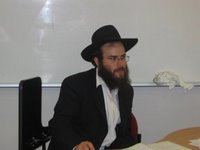
"Rabbi Yoseph Nerenberg gives a shiur
Monash Caulfield Lunchtime lectures
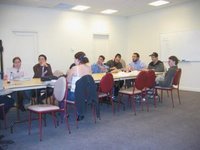
Merkos presents "Rabbi Yoseph Nerenberg"
No comments:
Post a Comment