Lag B'Omer is one of Judaism's days of festive celebration. One of the reasons we celebrate it is that on this day, a plague that killed 24,000 of Rabbi Akiva's students ended. What was the reason for that plague? Because, our Sages explain, Rabbi Akiva's students did not show respect for one another.
That explanation has raised many questions. Rabbi Akiva placed great emphasis on sharing and unity. It was he who taught: "'Love your fellowman as yourself' is a great general principle in the Torah." How then could his students depart from their master's path and fail to show one another respect?
Chasidic thought explains that because every person is unique in his nature and thought processes, he has a unique path in the service of G-d. Similarly, each of Rabbi Akiva's disciples had his own approach. Because they were highly developed individuals, each had internalized his particular approach to the point that it dominated his personality.
Operating from within his own perspective, each considered any approach different from his own as incomplete and inadequate. Being men of integrity, they no doubt spoke their minds plainly. And since all were intensely involved in their own paths of service, none would change. The tension between them escalated, as the deep commitment every student felt to his own particular approach prevented him from showing respect for those who followed a different path.
What was wrong with the students' perspective? Nothing and everything.
Nothing, because every one of the paths proposed by the students could have been correct.
And everything, because their tunnel-vision prevented them from seeing any version of the truth other than their own.
No matter how deeply we are involved in our own service to G-d, we must remain broad-minded enough to appreciate that someone else may have a different approach. Other paths may appear inadequate, but this perception may stem from our own limitations.
Furthermore, even if someone is indeed underdeveloped, his defi-ciencies need not prevent us from looking upon him in a favourable light. For every individual possesses a potential for growth. We should concentrate on helping others realize that potential, rather than merely accentuating their need to do so.
Rabbi Akiva's own life serves as an example of how any person can reach greatness regardless of his background. Rabbi Akiva descended from a family of converts, and did not begin to study until the age of 40. Nevertheless, he attained such heights of scholarship that our entire knowledge of the Oral Law rests on his teachings.
We needn't wait for miracles to inspire us. Rabbi Akiva was motivated to begin studying Torah by a simple physical observation. Noticing how a rock had been worn away by the constancy of dripping water - though each drop had no apparent effect - he understood that Torah (which is likened to water) could refine even those aspects of his nature that were as rough as stone.
From Keeping in Touch by Rabbi E. Touger, published by Sichos in English


The Soul

G-d's Candle is Man's Soul
About Me

- Rabbi Rapp
- Melbourne, Victoria, Australia
- My aim to help students develop into proud and effective Jews empowering them to lead an optimistic, meaningful life and actualising their full potential. It is during these years at university that a strong and accessible organisation such as ours is so important. We are here to assist you.
Monash Clayton - Wednesdays 1.00 pm to 2.00pm
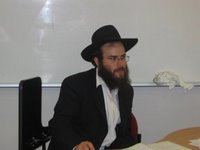
"Rabbi Yoseph Nerenberg gives a shiur
Monash Caulfield Lunchtime lectures
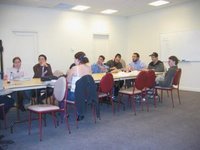
Merkos presents "Rabbi Yoseph Nerenberg"
No comments:
Post a Comment