Moses, Aaron and the Elders stood weeping with despair, not knowing what to do. Zimri, a prince of the tribe of Shimon, had openly brought Kozbi, a Midianite woman, into his tent. Since the Giving of the Torah, the Jewish people had been forbidden to marry or have relations with Midianites. Witnessing this scene, together with the Jewish leaders stood Pinchas, one of Aaron's grandsons.
Pinchas saw that the leaders were silent, yet he did not hesitate. Courageously he reminded Moses of the law which the latter seemed to have forgotten - that under these circumstances, one who is "jealous" of G-d's honor may execute the offender. Moses replied, "You are the one who has remembered and reminded us of the law. You be the one to carry out the verdict." Pinchas entered Zimri's tent and slew him together with Kozbi. Pinchas had stemmed the tide of immorality and idol-worship, which had become rampant in the Jewish camp. As a result, Pinchas earned a great spiritual reward for averting G-d's anger against His people.
Pinchas was not only junior to the leaders in age but also in Torah learning. Yet, when Torah-law demanded action, Pinchas did not indulge in rationalization; he did not say "there must be a good reason why Moses, Aaron and the Elders - who surely know Torah better than I - are silent." No! Respectfully, yet boldly, Pinchas spoke up. Then, he took decisive action with great self-sacrifice - and saved Israel. G-d had caused Moses to forget the law, providing Pinchas with the opportunity to act and earn G-d's reward of the priesthood.
To know is to do: If one becomes aware of a teaching that he can implement, of a mitzva (commandment) he can do, let him do so. If one witnesses an action that needs to be corrected, let him speak up, let him act. If he sees that the accepted leaders are silent and inactive, let him realize that this may have happened in order that he should earn a special Divine reward.
In this week's portion, named Pinchas, we learn of Pinchas' reward. For in the Alm-ghty's plan for the universe, each individual has certain mitzvot and opportunities for Jewish action that are destined to be presented to him - and to no one else - for fulfillment. If, therefore, one notices that no one is taking action in a situation that he has come across, this may be because it is his mitzva, for him alone to fulfill.
From A Thought for the Week - Detroit. Adapted from the works of the Lubavitcher Rebbe.


The Soul

G-d's Candle is Man's Soul
About Me

- Rabbi Rapp
- Melbourne, Victoria, Australia
- My aim to help students develop into proud and effective Jews empowering them to lead an optimistic, meaningful life and actualising their full potential. It is during these years at university that a strong and accessible organisation such as ours is so important. We are here to assist you.
Monash Clayton - Wednesdays 1.00 pm to 2.00pm
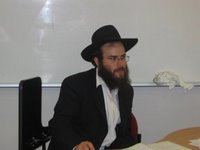
"Rabbi Yoseph Nerenberg gives a shiur
Monash Caulfield Lunchtime lectures
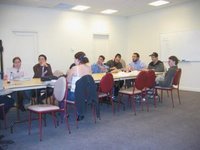
Merkos presents "Rabbi Yoseph Nerenberg"
No comments:
Post a Comment