Freely translated from letters written during the years
of leadership of the previous Rebbe
4 Sivan, 5705 [1945]
Greetings and blessings,
You are certainly aware that our friend Mr. S- sent a check for Merkos L'Inyonei Chinuch. I would like to take this opportunity to again express our heartfelt thanks for your efforts, trouble, and work in this matter in the past, present, and also, we hope in the future. The fundamental yasher koach ["well done"] comes to you from the work itself which is achieved and can continue through this donation.
The first of the Ten Commandments communicated at the time of the Giving of the Torah states: "I am G-d, your L-rd, who took you out of the land of Egypt." The commentaries (e.g., Ibn Ezra) ask: Why doesn't the Torah mention an even greater feat, the creation of heaven and earth?
Moreover, not only is the creation of heaven and earth a greater achievement, it is relevant to all generations. The Exodus from Egypt, by contrast, was witnessed only by that generation and was important primarily to them.
Chassidus answers this question as follows: The creation is a yesh [a material entity]. Making such an entity from absolute nothingness was accomplished by the ray of G-dliness that relates to the worlds. The Exodus from Egypt, by contrast, was possible only through "signs and wonders" (Deut. 4:34), i.e., removing that yesh from the logical principles and limitations which govern the creation. This is hinted at by the Hebrew term Yetzias Mitzrayim ("the Exodus from Egypt"). For Mitzrayim, Egypt, shares the root of the word meitzarim, meaning "boundaries and limitations" as in Eichah 1:3. This requires a much higher revelation of G-dliness. Therefore, the Exodus is mentioned in connection with the Giving of the Torah, which transcends the limitations of creation.
We find, to make a distinction, a similar pattern with regard to human conduct. Teaching - either oneself or a colleague - to adopt a new positive behavioral pattern is comparatively easy when compared to changing and remaking one's principles. The latter involves going out of the norms that one has established for oneself and which have shown themselves to be valid with regard to one's personal matters, although they create difficulties in a particular situation. This involves an exodus from one's boundaries and limitations. And it is much more difficult.
In this, I hope, my dear Mr. K-, you will help Mr. S- step beyond his limitations and governing principles and accept in a complete manner the directives from my revered father-in-law.... Certainly, as has been the pattern until now, you will have success in this endeavor.
With good wishes and with holiday blessings,
* * *
Eve of Shavuos, 5709 [1949]
Greetings and blessings,
...We are approaching the day of the receiving of the Torah. "'Love your fellow as yourself 'is a great general principal in the Torah" and "You shall certainly help him" is one of the Torah's commands. And so, until when? Either I should help you in your paint business or it's time - indeed, it is overdue - that you should work together with me in Merkos L'Inyonei Chinuch.
What is the purpose in delaying and procrastinating another week or another month?
Gevald! Reb Avraham, when will I begin thinking about what is genuinely good for me? And when will you do that for yourself?
May you have a happy holiday and may all the Rebbe's blessings be fulfilled.
From "I Will Write It In Their Hearts," translated by Rabbi
Eliyahu Touger, published by Sichos In English


The Soul

G-d's Candle is Man's Soul
About Me

- Rabbi Rapp
- Melbourne, Victoria, Australia
- My aim to help students develop into proud and effective Jews empowering them to lead an optimistic, meaningful life and actualising their full potential. It is during these years at university that a strong and accessible organisation such as ours is so important. We are here to assist you.
Monash Clayton - Wednesdays 1.00 pm to 2.00pm
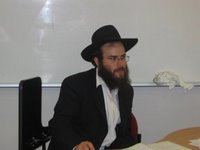
"Rabbi Yoseph Nerenberg gives a shiur
Monash Caulfield Lunchtime lectures
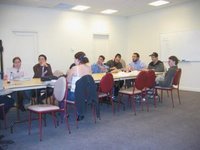
Merkos presents "Rabbi Yoseph Nerenberg"
No comments:
Post a Comment