This week's Torah portion, Shemini, contains three seemingly unconnected incidents and ideas. The portion opens with an account of the eighth day of the consecration of the Sanctuary, moves on to the death of Aaron's two sons, Nadav and Avihu, and concludes with a list of kosher animals and the prohibition against eating insects and reptiles.On each of the first seven days of consecration, Moses built the Sanctuary only to take it apart again later that very same day. Only on the eighth day ("shemini") did he put it together, and it remained standing. On the eighth day, a fire came down from Heaven and consumed the sacrificial offerings. The eighth day thus had an advantage over the previous seven.
The two sons of Aaron were on an extremely high spiritual level. According to Chasidic teachings, their yearning for G-dliness was so powerful that their souls could simply not remain in their physical bodies, and they died. Although this is obviously not something G-d wants or expects from us, it nonetheless attests to their exalted spiritual stature.
After the Torah relates what happened to Nadav and Avihu it warns us against emulating their actions. From this we learn that the Jewish people were on such a high spiritual level at the time that a warning was necessary.
It is therefore surprising, at first glance, that after recounting two situations relating to exalted spiritual levels - the eighth day of consecration and the deaths of Nadav and Avihu - that the same Torah portion also contains the prohibition against eating insects and reptiles. The law against eating creatures in this category is perfectly understandable to the human mind; it is only human nature to find them repugnant. Why, then, does the Torah find it necessary to warn us about something that is so obvious?
The answer is that regardless of a Jew's spiritual standing he must always have kabalat ol, acceptance of the yoke of Heaven. Despite whatever spiritual attainments he many have achieved, in the end there is nothing as important as kabalat ol. A person must never think that because he is on a high spiritual level, he is automatically "immunized." Without genuine acceptance of the yoke of Heaven there is always the danger of deterioration - even to the point of eating insects and reptiles, G-d forbid!
Accordingly, the Torah's prohibition against eating creeping things immediately follows the other two incidents to teach us that kabalat ol is required in all circumstances and situations in life.
Adapted from Volume 1 of Likutei Sichot


The Soul

G-d's Candle is Man's Soul
About Me

- Rabbi Rapp
- Melbourne, Victoria, Australia
- My aim to help students develop into proud and effective Jews empowering them to lead an optimistic, meaningful life and actualising their full potential. It is during these years at university that a strong and accessible organisation such as ours is so important. We are here to assist you.
Monash Clayton - Wednesdays 1.00 pm to 2.00pm
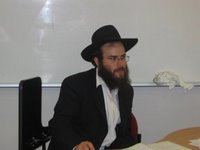
"Rabbi Yoseph Nerenberg gives a shiur
Monash Caulfield Lunchtime lectures
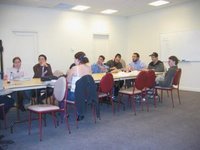
Merkos presents "Rabbi Yoseph Nerenberg"
No comments:
Post a Comment