Time is relative. When you're "on hold" for the operator or customer service rep, each minute is an endless source of annoyance. However, when you are frantically finishing an exam, 60 seconds is far too short. When you're late for an appointment and caught in traffic, each second is a year. But when you're doing the finishing touches before the "company" arrives, every second is a windfall.Time can also stretch and shrink. For children, the months of the school year drag on interminably while the vacation days seem to instantly disappear. As we get older, though, we speak in terms of how "time flies." Days, weeks, months, years, blur together. And though we feel as if just yesterday we were in high school, we receive invitations to attend 10, 25, or 50 year reunions.
In every day there are seconds, minutes and hours. And every instant of all of our days should be filled with meaningful pursuits. "Wasting time" is not a phrase traditionally found in the Jewish lexicon. One might even go so far as to say that time is not ours to waste. For the Jewish concept of time is that it is a precious gift given to us by G-d. As the saying goes, "The past is history, the future is a mystery. Today is a gift. That's why it's called 'present.'"
Not using the gift of time in a manner deemed appropriate by the Gift-giver is, in essence, saying that the gift is not valued. Time not used, or not used properly, is lost; and lost time can never be regained.
Time, Chasidic thought teaches, must be guarded. Every bit of time, each day that passes, is not just a day but an entire lifetime. As Jewish teachings express, "The day is short, the work is much... and the Master is pressing." (Avot 2:15)
The "day" referred to in the above teaching is a person's lifetime. When a person realizes the nature of the work before him - to conduct his entire life in accordance with the Master's will - he understands that one day, one lifetime, is indeed short.
And because life is so short, we must make use of every moment: the moments of our days and of our nights; the moments of our youth and of our maturity; the moments when we have the vigor to "burn the candle at both ends" and the moments when the candle is flickering and fading.
A thoughtful incident about time and the last moments of a candle's light is told concerning Rabbi Yisrael Salanter. One evening, Rabbi Salanter passed the house of a shoemaker, and saw him working by the light of a candle that was almost dying out.
"Why do you work so late?" Rabbi Salanter asked. "The candle will soon go out, and you won't be able to do anymore."
"It does not matter that the candle will soon go out," the shoe-maker replied. "While the candle burns, I can still make repairs."
Rabbi Salanter was deeply impacted and concluded, "A person works for material sustenance all the while that the candle is burning. So, too, should he work for the needs of his soul and repair as much as he possibly can as long as the lamp of G-d, which is the soul of person, is still burning."
The 22nd yartzeit of Rebbetzin Chaya Mushka. The numerical equivalent of the Hebrew letters of her name is 470, the same as the numerical value of the Hebrew word "eit" - time.


The Soul

G-d's Candle is Man's Soul
About Me

- Rabbi Rapp
- Melbourne, Victoria, Australia
- My aim to help students develop into proud and effective Jews empowering them to lead an optimistic, meaningful life and actualising their full potential. It is during these years at university that a strong and accessible organisation such as ours is so important. We are here to assist you.
Monash Clayton - Wednesdays 1.00 pm to 2.00pm

"Rabbi Yoseph Nerenberg gives a shiur
Monash Caulfield Lunchtime lectures
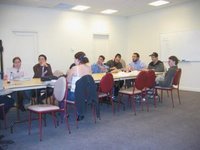
Merkos presents "Rabbi Yoseph Nerenberg"
No comments:
Post a Comment