Freely translated and adapted
17 Elul, 5710 (1950)You ask to be mentioned at the gravesite of my father in law, the Rebbe, of blessed memory; I will do as you ask. You write that you have no understanding of this. [To this I respond that] even when you eat, drink, and sleep, you surely do not contemplate first how this affects your body and soul, and you do all this even if you don't understand how the impact works. The same principle applies here as well.
As for what you write that it [visiting the gravesite of a Tzaddik (righteous person)] appears: like speaking to the dead; like directing one's thoughts to a force other than G-d, G-d forbid.
You surely understand on your own that this is not so. For it is accepted [in Torah sources] that Caleb the son of Yefuneh [Sotah 34b], several Tana'im and Amora'im, and Tzaddikim throughout all the generations did so.
Your question can be explained further, albeit in brief: Even when people would come to the [Previous] Rebbe to request a blessing [during his lifetime], they would come to him not on account of the greatness of his body, but on account of the greatness of his soul. The whole idea of death is only possible for the body, since the soul is eternal. This is true of the soul of a Tzaddik in particular, for it has no connection whatsoever to Purgatory, Kaf HaKela [a punishment for the soul after death], etc. [See Zohar 3:21b] The death of the soul of the Tzaddik is termed Histalkus, which means an elevation to a higher level, and he is not called a dead person, G-d forbid, as it is written in the Zohar (3:71) [thus, visiting the Tzaddik's gravesite does not constitute speaking to the dead].
As for what you write that it appears like directing one's thoughts to a force other than G-d; in short, this is not so. For the request is that the Tzaddik in his great righteousness plead favorably on behalf of the one requesting the blessing before the King of all kings, the Holy One, blessed be He.
There is a second intention in this regard: Every Chassid and person connected to the Tzaddik is an individual aspect of the soul of the Tzaddik, which is a great gestalt. It [the Tzaddik's soul] is comparable to the head relative to its individual souls [which are compared to the body], as explained in Tanya chapter two.
Every individual organ receives its sustenance from the soul, and the soul vests itself first in the head and the brain, and from there the vitality is divided up according to the individual needs of each individual organ.
So is it also in the case of a Chassid and a Rebbe: Since the head is healthy and strong, it contains all the vitality of all the individual bodily organs. [Thus,] in order for the individual organ to be healthy, it must be fully connected to the head: The sinews and nerves that join the head with the organs must be open, for then the vitality related to each respective organ will flow to it.
Generally speaking, this is the concept of Hiskashrus, the bond of a Chassid and a Rebbe. Through this the Chassid receives everything that he needs, both materially and spiritually.
Translated and adapted by Rabbi Yehoshoiphot Olliver, published on a-farbrengen.blogspot.com


The Soul

G-d's Candle is Man's Soul
About Me

- Rabbi Rapp
- Melbourne, Victoria, Australia
- My aim to help students develop into proud and effective Jews empowering them to lead an optimistic, meaningful life and actualising their full potential. It is during these years at university that a strong and accessible organisation such as ours is so important. We are here to assist you.
Monash Clayton - Wednesdays 1.00 pm to 2.00pm
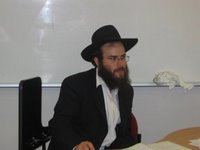
"Rabbi Yoseph Nerenberg gives a shiur
Monash Caulfield Lunchtime lectures
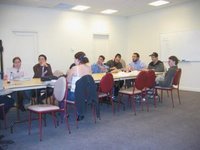
Merkos presents "Rabbi Yoseph Nerenberg"
No comments:
Post a Comment