And Isaac went out to meditate in the field (Gen. 24:63)
Rashi explains that the word "meditate" means "to pray - as if pouring forth the contents of one's heart." If such is the case, why didn't the Torah explicitly state that Isaac went out to pray in the field? We are supposed to take a lesson for our general conduct from the way Isaac prayed. A person should not call attention to himself and publicly announce his fear of Heaven. Rather, we should conduct ourselves as Isaac did - quietly, and without fanfare. A passer-by would have thought that Isaac was only strolling in the field, when in reality he was composing the afternoon prayer.
(And Isaac went out to meditate in the field (Gen. 24:63)
Rashi explains that the word "meditate" means "to pray - as if pouring forth the contents of one's heart." If such is the case, why didn't the Torah explicitly state that Isaac went out to pray in the field? We are supposed to take a lesson for our general conduct from the way Isaac prayed. A person should not call attention to himself and publicly announce his fear of Heaven. Rather, we should conduct ourselves as Isaac did - quietly, and without fanfare. A passer-by would have thought that Isaac was only strolling in the field, when in reality he was composing the afternoon prayer.
(Likutei Amarim)
* * *
The man took a gold earring, weighing a half-shekel and two bracelets.
(24:22)
The commentator Rashi explains that the half-shekel alludes to the half-shekel that the Jews donated for each person, while the two bracelets allude to the two Tablets containing the Ten Commandments.
With these gifts, Eliezer implied that when establishing a Jewish home, Torah and the performance of mitzvot form its pillars. The half-shekel illustrates the mitzva of charity, while the two bracelets, symbolizing the two Tablets, allude to the Torah itself, which is included in the Ten Commandments.
(Likutei Sichot)
* * *
And the servant took...all of his master's best possessions in his hand (Gen. 24:10)
Why was it necessary for Abraham to entrust his servant with all of his best possessions? Would not most of them have sufficed for his mission to find a proper bride for Isaac? Abraham invested all of his being to ensure that this marriage take place. He realized that this was not merely a wedding between two individuals, but that the fate of the entire Jewish people hinged on this union. We should likewise invest all of our resources into carrying out our ultimate mission in the world.
(Likutei Amarim)
* * *
The man took a gold earring, weighing a half-shekel and two bracelets.
(24:22)
The commentator Rashi explains that the half-shekel alludes to the half-shekel that the Jews donated for each person, while the two bracelets allude to the two Tablets containing the Ten Commandments.
With these gifts, Eliezer implied that when establishing a Jewish home, Torah and the performance of mitzvot form its pillars. The half-shekel illustrates the mitzva of charity, while the two bracelets, symbolizing the two Tablets, allude to the Torah itself, which is included in the Ten Commandments.
(Likutei Sichot)
* * *
And the servant took...all of his master's best possessions in his hand (Gen. 24:10)
Why was it necessary for Abraham to entrust his servant with all of his best possessions? Would not most of them have sufficed for his mission to find a proper bride for Isaac? Abraham invested all of his being to ensure that this marriage take place. He realized that this was not merely a wedding between two individuals, but that the fate of the entire Jewish people hinged on this union. We should likewise invest all of our resources into carrying out our ultimate mission in the world.


The Soul

G-d's Candle is Man's Soul
About Me

- Rabbi Rapp
- Melbourne, Victoria, Australia
- My aim to help students develop into proud and effective Jews empowering them to lead an optimistic, meaningful life and actualising their full potential. It is during these years at university that a strong and accessible organisation such as ours is so important. We are here to assist you.
Monash Clayton - Wednesdays 1.00 pm to 2.00pm
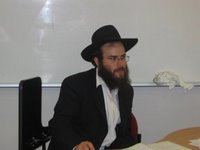
"Rabbi Yoseph Nerenberg gives a shiur
Monash Caulfield Lunchtime lectures
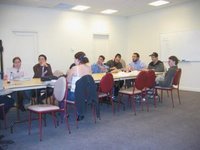
Merkos presents "Rabbi Yoseph Nerenberg"
No comments:
Post a Comment