by Rabbi Eliezer Zalmanov
The eighteenth century Rebbe, Rabbi Levi Yitzchak of Berditchev, was referred to by his colleagues and followers as the "Advocate of Israel." He was famed for constantly highlighting the positive in his fellow Jews, so that they find favour in G-d's eyes.One morning during services, he noticed that someone had stepped out of the synagogue in middle of the "Shema." Peering out the window, the rabbi saw this individual, still decked out in his Tallit, greasing the wheels of his horse-drawn carriage.Rabbi Levi Yitzchak immediately raised his eyes towards heaven and called out, "Master of the Universe! How great are your children. Even while involved in extremely mundane tasks, they still make time for prayer!"Indeed, a unique perspective on worshipping G-d.The term "religious" is oftentimes used as reference to one who is firm in his or her beliefs. People who attend services regularly are considered to be more religious than those who aren't as frequent attendees.According to Judaism, however, being religious means observing G-d's laws. We believe that G-d has given the Jewish people 613 commandments - mitzvot. Each mitzva provides us the opportunity to strengthen our bond with G-d.Every mitzva is independent of the others, and with every mitzva performed - or transgression avoided - a link is added to our connection. The more we do, the stronger the bond.At times, we may hesitate taking upon ourselves the observance of certain a mitzva. The reluctance usually stems from feelings of hypocrisy. For, how can I observe one mitzva while I disregard another?A quote I am fond of repeating is "There are three types of Jews: Those who do mitzvot, those who do more mitzvot, and those who do even more mitzvot." Simply because you aren't prepared to make a life changing decision regarding some mitzvot, shouldn't preclude you from observing those you are able, and willing, to.Rabbi Levi Yitzchak's comment regarding the individual greasing his wheels while praying was referring to precisely this scenario. The man's prayer was a step in the right direction. Had he thought himself a hypocrite, he would have sooner stopped praying rather than stop greasing.By emphasizing the positive in this behaviour, Rabbi Levi Yitzchak was reminding us that we aren't at all perfect, and that every activity is judged by its own merit.And the more we do, the better we off we are.So, go ahead, be a hypocrite!Rabbi Zalmanov is the co-director, with his wife, of Chabad of Northwest Indiana. To comment on this article visit chabadnwind.com


The Soul

G-d's Candle is Man's Soul
About Me

- Rabbi Rapp
- Melbourne, Victoria, Australia
- My aim to help students develop into proud and effective Jews empowering them to lead an optimistic, meaningful life and actualising their full potential. It is during these years at university that a strong and accessible organisation such as ours is so important. We are here to assist you.
Monash Clayton - Wednesdays 1.00 pm to 2.00pm
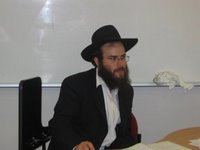
"Rabbi Yoseph Nerenberg gives a shiur
Monash Caulfield Lunchtime lectures
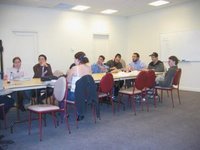
Merkos presents "Rabbi Yoseph Nerenberg"
No comments:
Post a Comment