By Mendel Jacobson
He sees the man dancing as if there are no worries in the world. His legs pump in a rhythm only his soul could produce. He looks like a flame, flickering on and on, reaching for a place beyond anything he has ever known. Wow, how could that man be so happy?
"Which man?"
Startled, the 14-year-old boy didn't realize he'd asked the question aloud.
"Which man?" His father asks him again.
"That man," the boy points to the whirling man. "He must be the happiest man on earth."
His father looks to where his son is pointing and sees the black-bearded man with five children in tow; his eyes fill with tears and he sighs.
"That man just lost his young wife six days ago."
"But then how can he be so happy, how can he possibly dance like that?"
"Because it is Simchat Torah and it is a mitzva (commandment) to dance and to be happy. This is what a Jew does; this is what a real Chasid does."
Although this story happened before I was born, I have heard it many times.
The year was 1969 and, on the second day of Sukot, the young man lost his wife to leukemia. Every year, on Simchat Torah, the young man would take his five young children to a small shul (synagogue) in the East Flatbush neighborhood of Brooklyn, where they would dance with the Torah and rejoice with the community. That year the young man did the same.
The children's grandmother, their mother's mother, dressed them in their finest clothing and sent them off with their father to East Flatbush.
It was there, in that little shul, that this dialogue between father and son took place.
After the dancing in East Flatbush ended, the young man and his five children walked back to Crown Heights. He dropped his younger children off at home with their grandmother and hurried to 770 Eastern Parkway, the central Chabad Synagogue, where the Lubavitcher Rebbe was about to begin a farbrengen (Chasidic gathering). Every year on Simchat Torah, before the dancing would begin, the Rebbe would speak for a number of hours, discussing the intricate energies of Simchat Torah and hakafot (circuits of dancing on Simchat Torah). At different times throughout the talk, the Rebbe would pause and the Chasidim would begin singing a nigun, a Chasidic melody sometimes dating back hundreds of years. The young man of whom we speak had the privilege to begin the nigunim at the Rebbe's farberengens.
The shul at 770 Eastern Parkway was packed from floor to ceiling; people were clinging to bleachers and rafters just as they did to the Rebbe's every word. As the Rebbe finished the first part of his talk, he turned to the young man and motioned for him to say L'chaim (To Life!) on some vodka. The crowd, watching with awe, all knew the young man had just lost his wife and they were wondering what his choice of song would be.
Through the hush of thousands of people, a small but defiant voice could be heard: "Mi vadiom nye patonyem, ee v'agniom nye s'gorim," a hope-filled Chasidic Russian song meaning, "We in water will not drown, and in fire will not burn." As the Rebbe began emphatically swinging his arms, he suddenly stood up and the crowd became more and more excited, singing in a frenzy, "We in water will not drown, and in fire will not burn; we in water will not drown, and in fire will not burn." Faster and faster they chanted, as if in a trance. Those present could not believe this little man, swinging back and forth, raising his voice from the depths of his soul, "We in water will not drown, and in fire will not burn," as if G-d had not just taken his beloved wife, as if he was truly the happiest man alive.
Fast-forward 20 years. A call comes in to a major Jewish children's organization in Brooklyn.
"My name is so-and-so and I'm wondering if you could send some manpower to assist me with a Simchat Torah program I am hosting for the children of my community."
"Sure," the man working in the organization happily replies. "But, if I may ask, why are you hosting a children's program for Simchat Torah - are you a youth director at a synagogue?"
"No, I'm not, but when I was growing up, my father and I would go to a small shul in East Flatbush to celebrate Simchat Torah. One year, as I stood watching the people dancing in a circle, I noticed one man who looked so happy, as if everything in the world was perfect. I stood there transfixed, wondering how this man could exude so much joy. I asked my father and he told me that this man had just lost his wife but, because he is a real Jew and the Torah says to be happy on Simchat Torah, he is happy. This made a very big impression on my 14-year-old mind - that a Jew could put aside all his pain and suffering and be happy just because it's a mitzva was unbelievable to me - so on that day I made myself a promise: in the future, when I have the means to do so, I will help other Jewish children celebrate the true happiness and joy of Simchat Torah."
Fast-forward another 17 years. On 23 Cheshvan, 2006, the hero of our story, Reb Hirsh Gansburg, the young man who lost his wife in 1969, completed his mission down on earth. Yet, his life - and the life of his wife - is as true and vibrant as ever. His children and grandchildren have built families and communities, bringing light into this universe; the people he has influenced continue to influence others.
The story of the young man has taught me much: even in the saddest of times, even when all seems lost, with a little joy, a little dance, a smile, everything can change.
And this much I know is true: "We in water will not drown, and in fire will not burn."
How do I know, you ask? That man, the one who took his five children to dance in East Flatbush those 37 years ago happens to be my grandfather, may his memory be blessed.


The Soul

G-d's Candle is Man's Soul
About Me

- Rabbi Rapp
- Melbourne, Victoria, Australia
- My aim to help students develop into proud and effective Jews empowering them to lead an optimistic, meaningful life and actualising their full potential. It is during these years at university that a strong and accessible organisation such as ours is so important. We are here to assist you.
Monash Clayton - Wednesdays 1.00 pm to 2.00pm
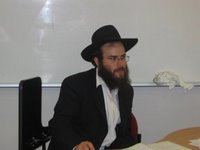
"Rabbi Yoseph Nerenberg gives a shiur
Monash Caulfield Lunchtime lectures
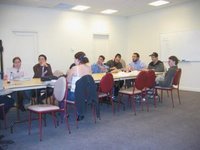
Merkos presents "Rabbi Yoseph Nerenberg"
No comments:
Post a Comment