"Love your neighbour as yourself." To the average person, this command has overtones of a pious sermon utterly detached from reality. For, an obvious question arises: "How can one be expected to love a person despite his obvious shortcomings?"
A non-Jew once approached the famous Hillel and expressed his desire to convert to Judaism. "Teach me the whole Torah while I stand on one foot," he demanded. The wise Hillel replied: "Don't do to others what is hateful to yourself. This is the whole Torah, the rest is commentary.
Now go and study!"
Hillel chose to express the precept of brotherly love in the negative
form: "Don't do to others what is hateful to yourself." Why did he not teach him this command in the simple positive form as it is stated in the Torah, "Love your neighbour as yourself?"
Hillel, in his profound wisdom, chose to express this command in a way which would explain and clarify the precept:
It is widely accepted that "Love is blind," and the blindest of all love is self-love. Every man is well aware of the faults of his character. He knows of his own shortcomings better than another person; yet so strong is his self-love that it smothers this awareness and does not let him feel the extent of his deficiencies in character. He is thereby able to find excuses for all his improper actions.
What is our most common reaction when someone else notices our faults and brings them to our attention? We are angered, not because his observation is untrue (we know all too well that he has noticed a real and true defect) but because we perceive that this fault has made an unfavourable impression upon him, and he does not lightly dismiss the shortcoming. In other words, he has removed the blindfold of our self-affection, forcing us to be aware of the full extent of our shortcomings a result which we find truly hateful.
Says Hillel, "If you find this removal of the blindfold of self-love hateful when it is done to you, then don't do it to others!" Let your love extend to your fellow too. When you observe his faults, dismiss them lightly and "make nothing" of them, just as you do your own.
From "A Thought for the Week," Detroit. Adapted from the works
of the Lubavitcher Rebbe


The Soul

G-d's Candle is Man's Soul
About Me

- Rabbi Rapp
- Melbourne, Victoria, Australia
- My aim to help students develop into proud and effective Jews empowering them to lead an optimistic, meaningful life and actualising their full potential. It is during these years at university that a strong and accessible organisation such as ours is so important. We are here to assist you.
Monash Clayton - Wednesdays 1.00 pm to 2.00pm
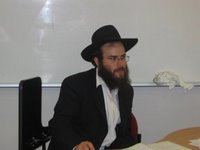
"Rabbi Yoseph Nerenberg gives a shiur
Monash Caulfield Lunchtime lectures
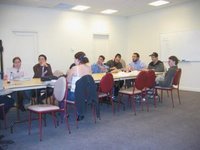
Merkos presents "Rabbi Yoseph Nerenberg"
No comments:
Post a Comment